Twenty minutes lost in the truck
Digging through a 180-page PDF on a phone screen while the customer waits is not diagnosis. It is billable time you never get back.
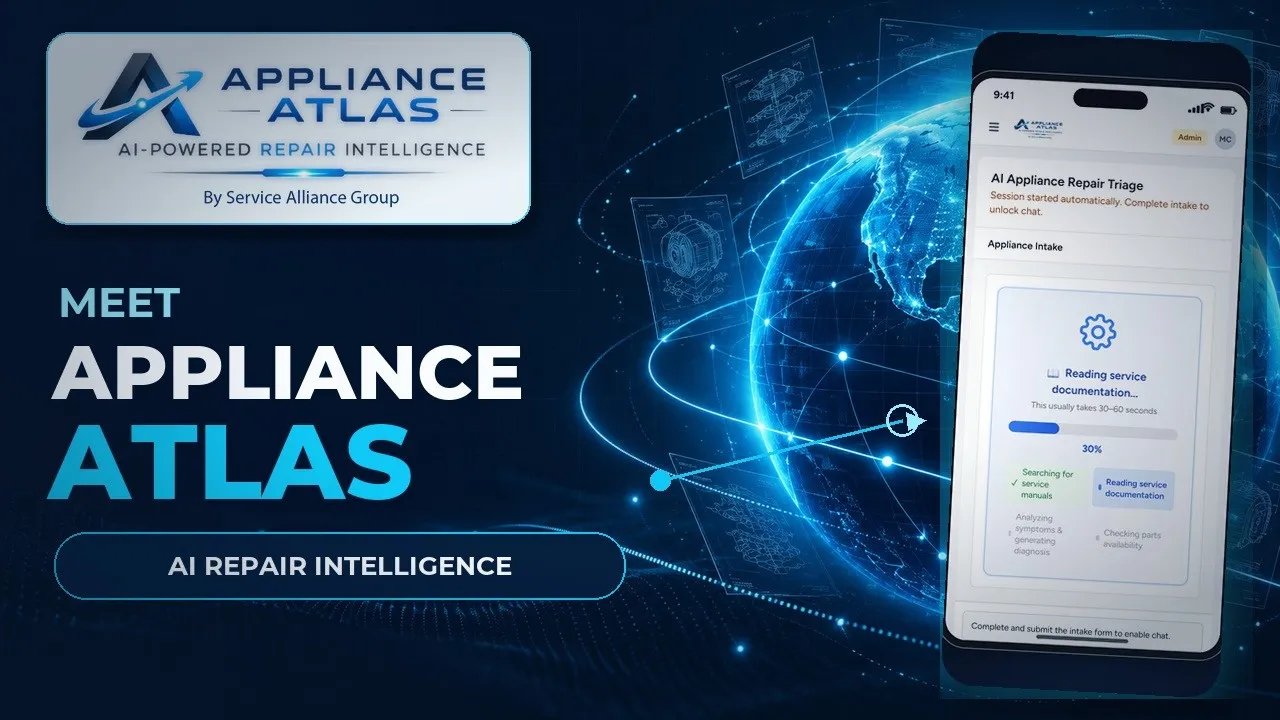
Enter the model and the symptom. Atlas pulls the real service documentation from a library of 131,000+ manuals and answers from it: error codes, test procedures, and the part number you actually need.
A short walkthrough: a model number and a symptom go in, a grounded answer and the right part come out.
The repair is rarely the hard part. Figuring out what is actually wrong, fast and on the first trip, is what separates a profitable call from a break-even one.
Digging through a 180-page PDF on a phone screen while the customer waits is not diagnosis. It is billable time you never get back.
Ask a general chatbot for an error code and it will confidently invent one. Wrong code, wrong part, wasted trip.
When the newer guys get stuck, they call the one person who knows. That call interrupts two jobs instead of one.
No training required. If you can describe the problem to another tech, you can use it.
Brand, model number, and what the machine is actually doing. Plain language, the way you would describe it to another tech.
Atlas finds the service documentation for that model in the library and reads the relevant sections before it answers anything.
Error code meanings, test procedures, and component checks that come from the manual for your model, not from a guess.
Once the diagnosis lands, Atlas points you to the OEM part and checks the number against a live parts catalog, so you order the right part the first time.
Why "grounded" matters. Most AI tools answer from memory and will invent an error code that sounds right. Atlas retrieves the service documentation for your specific model first, then answers out of those pages, and it stays anchored to that manual through every follow-up question you ask.
Every feature exists because a working tech needed it on a job that was going sideways.
Atlas retrieves the actual service documentation for the model you entered and builds its answer from those pages. Follow-up questions stay grounded in the same manual.
The full service manual library lives inside Atlas: tech sheets, wiring diagrams, parts lists, and service bulletins. Search and download as many as you need.
Ask what an F-code means on a specific model and get the manufacturer definition plus the diagnostic steps that follow it.
Atlas narrows the diagnosis to the failed component and checks its OEM part number against a live wholesale catalog, showing the price and whether it is in stock before you order. Fewer return trips, fewer restocking fees.
Every triage session is saved and searchable. Hit the same fault six months later and the previous diagnosis is right there.
Add technicians to your team so every truck has the same reference and your newer techs stop calling your best one on every stuck job.
The manual library used to be a separate subscription. It is part of Appliance Atlas now. The same 131,000+ files, in the same app that reads them for you.
Search and pull the document when you want to read it yourself. Ask Atlas when you would rather have the answer.
Grounded triage: error codes, test procedures, and component checks pulled from the manual for your exact model.
Full library access with unlimited searches and downloads: tech sheets, wiring diagrams, and parts lists as PDFs.
Team seats so every truck works from the same reference instead of calling your senior tech.
If your question is not here, the team is one message away.
A general chatbot answers from whatever it absorbed during training, which means it will confidently produce an error code or test procedure that does not exist for your model. Appliance Atlas works the other way around: it locates the service documentation for the model you entered, reads the relevant sections, and builds the answer from those pages. Follow-up questions stay anchored to the same manual.
No. It is part of Atlas now. The manual library and the AI triage are one application, so the same subscription gets you both. If you previously subscribed to the manual library on its own, everything you had access to is in here, plus the triage on top of it.
Yes. Search the library and download the PDF exactly as before. The AI triage is there when you want the answer instead of the document. Use whichever suits the job.
All the major residential brands techs see every day, across refrigeration, laundry, cooking, and dishwashing. If you hit a model that is not there yet, submit a request from inside the app and it gets sourced wherever the manufacturer has made it available.
No. Appliance Atlas is its own standalone product with its own subscription, so you do not need anything else to use it. The S.O.S. Course is a separate purchase for the business side of things.
Yes. It is built to be used one-handed in a laundry room, not at a desk.
Appliance Atlas is a standalone product with its own subscription. Pricing, plans, and team seats are all on the Atlas site.