A 5-Step Guide to Boosting Your Customer Referrals

Customer referrals are the cheapest calls an appliance repair shop will ever get. The homeowner on the line already trusts you, because someone they know said your name. They are less likely to shop your diagnostic fee against three other companies, and when the job goes well, they tell the next neighbor.
It is easy to leave referrals to chance. The tech does good work, the customer is happy, and then nothing happens, because nobody asked, nobody followed up, and the customer forgot your company name by the time their sister's dryer quit. This guide fixes that with five steps for earning referrals on purpose, starting with the next job on your board.
Table of Contents
Why Customer Referrals Beat Paid Leads
Think about how a referred call starts. "My neighbor said you fixed their fridge last spring, and they still talk about it." That caller is probably not comparing you to three other shops. They are asking when you can come.
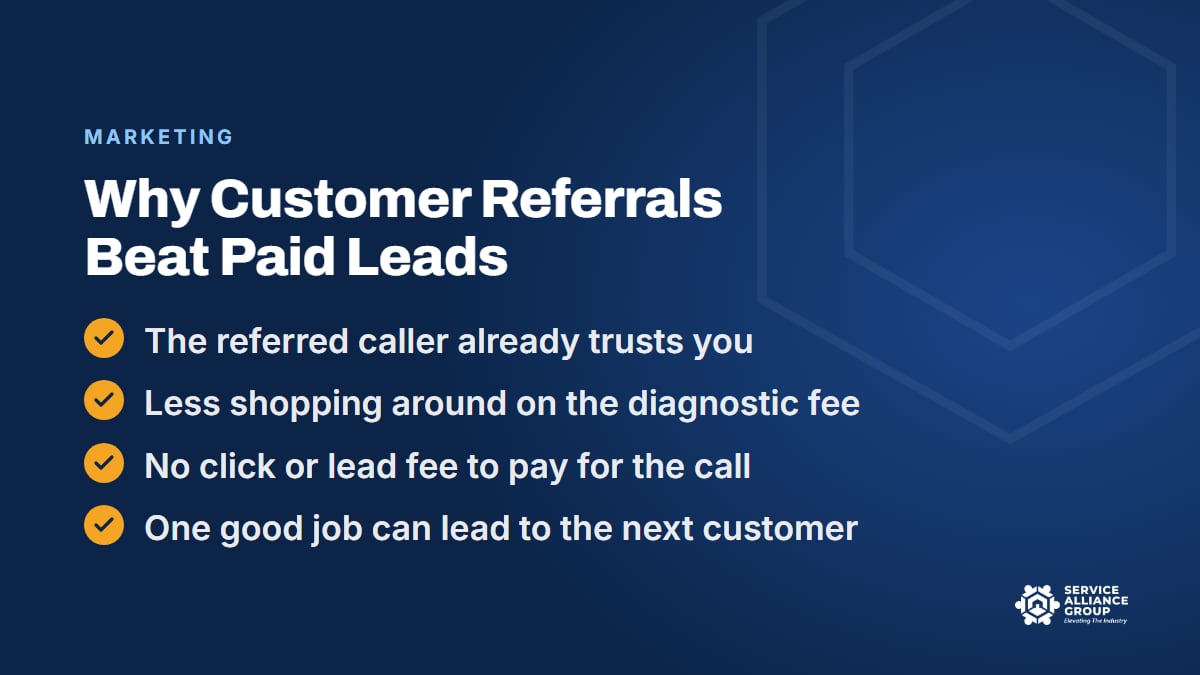
Compare that to a paid lead. You pay for the click or the lead, the homeowner is often calling two or three companies at once, and your CSR has to earn the booking from a cold start. Paid leads can work, but every one of those calls costs money and starts with less trust than word of mouth.
Word of mouth also compounds. The customer who came in on a referral can send you the next one, so one great job on a cul-de-sac can keep feeding you for years. And referrals do not stop when you pause a campaign. They tend to keep coming as long as the work stays good and the ask stays consistent.
Customers talk about the repair whether you manage word of mouth or not. They say "that company was great" or "I could never get anyone on the phone," and the five steps below give you a say in which story gets told.
Step 1: Earn the Referral on the Service Call
Customer referrals are decided in the laundry room, not on a business card. People rarely go out of their way to recommend a shop that was merely fine. They recommend the company that texted before arriving, showed up in the window, put on booties, and explained the problem in plain words.
Listen to what gets repeated at the neighborhood cookout. "The tech showed me the burnt-out heating element and explained why it failed." "They gave me two options and told me which one they would pick for their own house." "They told me straight that the fridge was not worth fixing." Every one of those moments is a technician decision, and every one is trainable.
The office side matters just as much. A phone answered on the second ring by a person who knows what a diagnostic fee is. A confirmation text with the tech's name. A call the morning of the appointment when the parts order is running late, instead of a no-show. Customers refer the whole experience, and the phone is the first half of it.
If your techs have never been trained on any of this, start with our free 5 Star Service Calls course. It walks through the on-my-way message, the door, the customer interview, options instead of one price, leaving it clean, and asking for the review, in 38 short lessons a tech can watch between calls.
The second visit and the callback
Two later moments can make or break a referral, even after a good first visit. The first is the parts-on-order job. The customer is living without a dishwasher for a week, and silence from your office feels like being forgotten. A text when the part ships and a call to lock in the second visit turn a wait into proof that you are organized.
The second is the callback. Handled well, it can still earn a loyal customer: the tech comes back fast, owns the miss, and does not bill a second trip when it was the shop's fault. Handled badly, a callback is a quick way to lose the customer and everyone they talk to.
Step 2: Ask at the Right Moment
A referral request buried in the invoice fine print is not really an ask. The right moment is when the appliance is running again and the customer says thank you. That is the peak of goodwill, and it fades fast.
Give your techs a line and make it a habit, not a personality trait. Something like: "Glad we got the washer going. If you know anyone dealing with a broken appliance, we would really appreciate you passing our name along." Then hand over the cards from Step 3. Twelve seconds, every job.
The ask should show up a second time in writing, two or three days later. A short text or email that says thanks, reminds them what was fixed, and closes with the referral line. By then the customer has run a few loads through the machine and knows the repair held.
Keep the review ask and the referral ask separate
Reviews and referrals both matter, but stacking the two asks in the same breath can weaken both. One simple pattern: ask every customer for an honest review at the door with a text link while the tech is still there, and make the ask for referrals in the follow-up message a few days later. If your review process needs work first, read why you should never pay for Google reviews and fix that before you layer on referrals.
Step 3: Make Referrals Easy to Give
A happy customer will not work to refer you. They will not look up your website or dig through old emails for an invoice. Customer referrals happen in a few seconds or not at all, so your job is to remove every bit of friction.
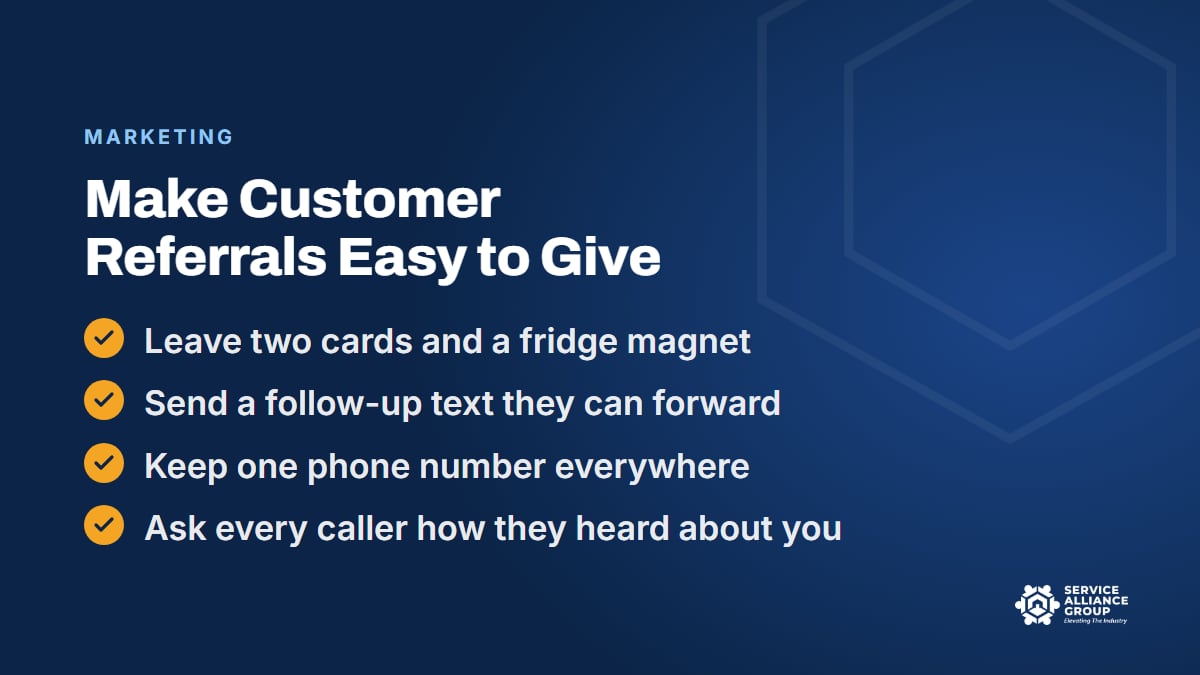
- Leave two cards, not one. One for the customer and one to hand to a neighbor. Say that out loud so they understand why there are two.
- Put a magnet on the fridge. It sits in the room everyone walks through, so your number is in plain sight when the next appliance acts up.
- Send a text they can forward. Your follow-up message should contain your company name, phone number, and a one-line description, so forwarding it is the referral.
- Use one phone number everywhere. The van, the magnet, the card, your Google Business Profile, and your website should all show the same number, so the number a neighbor gets is the number that works.
- Make the name easy to say. If customers have to explain what your company is called, they will say "the appliance guy," and the referral dies there.
Then close the loop on your end. Ask every caller how they heard about you, and when the answer is a person, write that name in the job notes. That one question tells you where referrals come from, who to thank, and which techs generate the most word of mouth.
Nextdoor and local Facebook groups deserve a mention here too. When someone posts "who do you use for appliance repair," your past customers can answer with your name, and a business page they can tag makes that recommendation easy to act on. Our guide to social media for appliance repair companies covers the setup.
Step 4: Follow Up So They Remember You
Word of mouth depends on memory: a customer can only refer you if they remember you. A household might not need you again for a year or two, and in between they see a lot of company names on a lot of vans. Follow-up is how you stay the one they think of when a neighbor asks.
A simple cadence a one-truck shop can run from its field service software:
- Two or three days after the job: a thank-you text with the tech's name, a reminder of what was fixed, and the referral line.
- One week: a quick check-in. "Is the dryer still heating like it should?" That message catches a problem while it is still an easy fix.
- Thirty days: the referral ask again, softly, along with one maintenance tip for the appliance you fixed.
- Twice a year: a seasonal reminder. Dryer vent season, holiday cooking season, the summer fridge check. Useful, short, and signed by a person.
- Every year: a "we are still here" message with the number, in case the magnet fell off.
That is about six touches in the first year and three a year after that, enough to stay familiar without wearing out your welcome. None of it needs an ad budget. It needs a list, which you already have, and a routine, which you can build in an afternoon. Keep the messages plain and personal, because a coupon blast every other week trains people to ignore you.
One rule before you start: get each customer's permission to receive texts when you book the job. Business texting comes with consent rules, so check what applies to you and ask a qualified professional if you are unsure.
Follow-up pays twice. It brings back the same customer when the next appliance fails, and it keeps your name close enough that they hand it to a neighbor. Repeat business and referrals come from the same list. If you want to see what that repeat and referral value adds up to, our article on how much a customer is worth walks through the math.
Step 5: Thank and Reward Within the Rules
Customer referrals deserve a thank-you every time. A handwritten note or a personal text from the owner can mean more than a gift card, because it tells the customer their word carried weight. Keep it short and keep the other customer's details private: "Thank you for sending your neighbor our way. It means a lot to a local shop." That closes the loop and plants the next referral, because people repeat what gets noticed.
If you want to add a reward, keep it simple and keep it honest.
- Reward the referrer after the referred job is complete, not when the call comes in.
- Make it something they actually want: a credit toward their next service call, a gift card to a local place, or a donation to a local cause in their name.
- Tell customers the reward exists, in the follow-up text and on the card, so it works as a nudge instead of a surprise.
- Track it in the job notes so nobody gets forgotten or paid twice.
Now the line you cannot cross. A referral reward is a thank-you for sending a customer, and it is never a payment for a review. Google's prohibited content policy bans offering payment, discounts, or free goods or services in exchange for any review. The Federal Trade Commission's rule on fake reviews and testimonials, in effect since October 21, 2024, bans buying reviews and allows civil penalties.
Keep "refer a neighbor" and "leave a review" in separate conversations, and never make a reward depend on whether or what someone posts online. Track every referral reward in your books, and ask your CPA how to record it. If you ever run a drawing or contest for referrals, check your state and local rules first and talk to a qualified professional.
Referral Partners: Realtors, Property Managers, and Appliance Stores
Customer referrals are not the only kind worth building. A few local businesses see broken appliances every week, and a reliable appliance repair company is a name they are glad to have. Partner referrals can also be steadier than homeowner word of mouth, because a property manager with a lot of units always has something breaking.
- Realtors and home inspectors. Home inspections often note appliance problems, and buyers may want them checked before closing. An agent with one number that answers looks good to their client.
- Property managers. They need a shop that answers, shows up in the window, and sends a clean invoice they can pass to the owner. Offer a direct line and a response time you can actually keep.
- Appliance dealers. Stores sell new units, but they also hear from customers whose old unit might be worth saving, and from buyers whose installation went sideways. A dealer without its own service department may be glad to send both.
- Home warranty companies are a different animal. They usually dispatch work at rates they set, so treat that as a business decision about margin, not as a referral partner.
Start with five partners, not fifty. Walk in with cards, explain what you fix and how fast you can get there, and offer a direct number that reaches a human. Then report back on every job they send: "Your tenant in the Maple Street unit is fixed, dryer belt, done in one trip." Partners keep referring people who make them look good, and a short monthly check-in keeps you on their list.
Keep those relationships about good service rather than payment. Some partners, such as home inspectors and real estate agents, work under licensing rules that can limit referral fees, so talk to a qualified professional before you offer one.
Keep Score for Ninety Days
You will not know whether customer referrals are growing unless you count. Give it ninety days and track five numbers, all of which come from the "how did you hear about us" question and your job notes.
- Referrals this month, and how many of them booked.
- Which customers sent them, so you know who to thank.
- Which techs generated them, so you know who is doing Step 1 right.
- Which partners sent work, and how fast you closed it.
- The share of new customers that came from word of mouth versus paid leads.
Put those numbers next to what you pay per booked job from paid sources and the comparison tends to settle the argument about where to spend your time. If nobody in the office is logging lead sources yet, our article on why it is important to monitor customer service lays out a simple weekly routine that includes booking rate by lead source.
Build the Whole Engine, Not Just the Ask
Customer referrals sit at the end of a system. Customers refer companies they can find, trust, reach, and remember, and you can build each of those pieces without an ad budget.
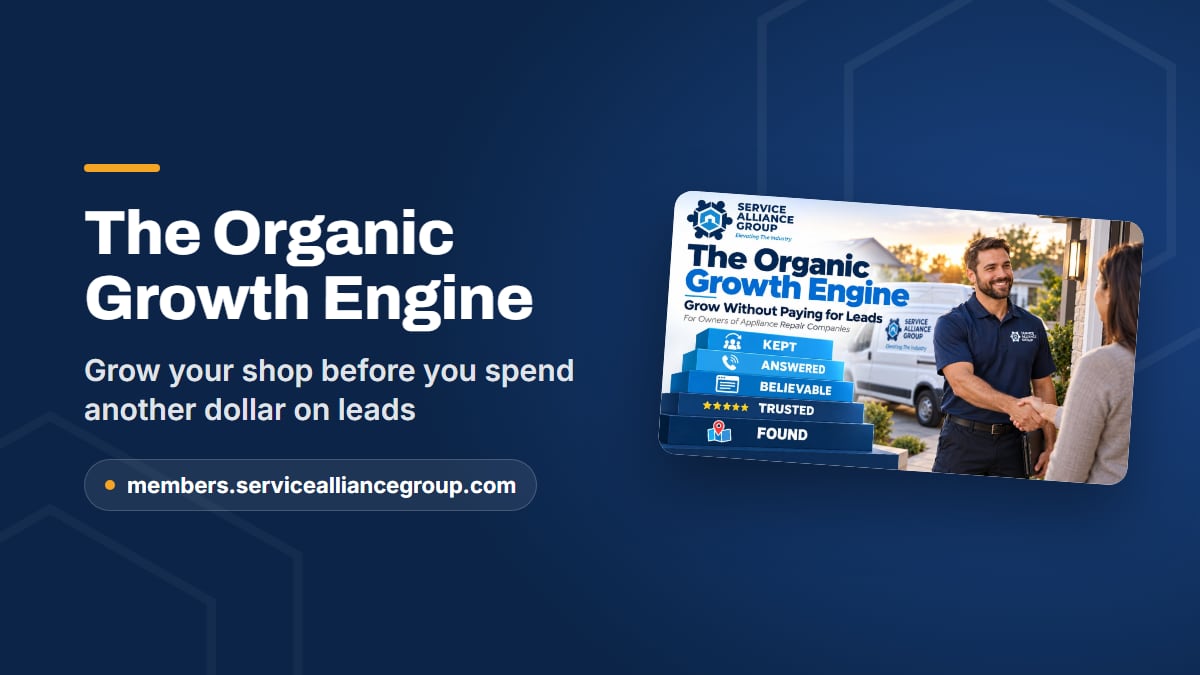
That is what The Organic Growth Engine teaches, in five layers: getting found without paying, being trusted before they call, a website that holds up, a human who answers and books, and customers who come back and refer. The last layer includes lessons on the follow-up cadence, referrals, and referral partners.
It is 47 short lessons and more than four hours, taught by Mike Carson, who runs a marketing agency built around this industry and is CEO and Co-Founder of Service Alliance Group. It comes with 11 downloadable build sheets and trackers, a final exam, and a certificate. If you only take one thing from it, take the follow-up cadence, because referrals follow memory.
And if you want to hear how other owners run their referral programs, The Alliance, our free private Facebook group, has more than 5,500 appliance repair business owners comparing notes.
Frequently Asked Questions
Should I pay customers for referrals?
You can, as long as the reward is for sending a customer and never for writing a review. A personal thank-you costs nothing and is a good place to start. If you add a reward, pay it after the referred job is complete, keep it simple, and ask your CPA how to record it. If you run a drawing or contest instead, check your state and local rules first.
When is the best time to ask for customer referrals?
Right after the repair, when the appliance is running and the customer says thank you. That moment carries the most goodwill. Then repeat the ask in writing two or three days later, once the customer has used the appliance and knows the fix held. A follow-up cadence keeps the ask alive through the year without feeling pushy.
Can I ask for a review and a referral at the same time?
You can, but each ask tends to land better on its own. One simple pattern: the tech asks every customer for an honest review at the door with a text link, and the office makes the referral ask in the follow-up message a few days later. Never offer anything for a review. Google's policies prohibit review incentives, and the FTC rule bans buying reviews and rewards tied to what a review says.
How do I track where referrals come from?
Ask every caller how they heard about you, and when the answer is a person, put that name in the job notes. Over a few months you will see which customers and partners send the most work, whose jobs lead to referrals, and exactly who to thank. If your field service software has a lead source field, you can run it as a report and watch the referral share of new customers over time.
Customer referrals reward the shops that do the job well and then stay in touch. Run the five steps for ninety days, keep the tally, and you will know exactly what word of mouth is worth to your shop.