Lifelong Learning in the Trades: 6 Powerful Habits That Pay Off
Lifelong learning in the trades usually gets talked about as a technician thing: new models, new control boards, new certifications. That part is true, and it never stops. But the learning that decides whether your appliance repair business makes money is the part nobody handed you when you started fixing machines: pricing, hiring, cash, and the phone.
Picture an excellent tech who opens a shop. They can diagnose a no-heat dryer in ten minutes and cannot tell you what an hour of their van costs. That is a gap in what the trade teaches, and it closes the same way every technical skill did: on purpose, a little at a time. Here are six habits that close it.
Table of Contents
Why Lifelong Learning in the Trades Looks Different for Owners
Technical skill compounds on its own. Every job puts a machine in front of you, and every strange failure teaches you something you will use again. Ten years in, you are better than you were, even if you never opened a book.
Business skill does not work that way. You can run five thousand jobs and never once learn what your cost of doing business is per hour, because no job forces the question. The trades reward fixing. Owning rewards deciding, and deciding well takes information you have to go get.
Left to chance, the business side gets learned by losing money. The underpriced year. The hire who walked off with a customer list. The January with no cash because nobody looked at the forecast in October. Lessons like those are expensive, and they arrive on their own schedule. Lifelong learning, the deliberate kind, is cheaper and faster, and it is how a tech who owns a job becomes an owner who runs a business.
1. Learn the Business Side on Purpose
Pick one subject a quarter and stay on it. Not "get better at business," which is too big to start. Pricing this quarter. The phone next quarter. Then hiring. Then cash. Four subjects a year, done properly, will change your shop more than four years of good intentions.
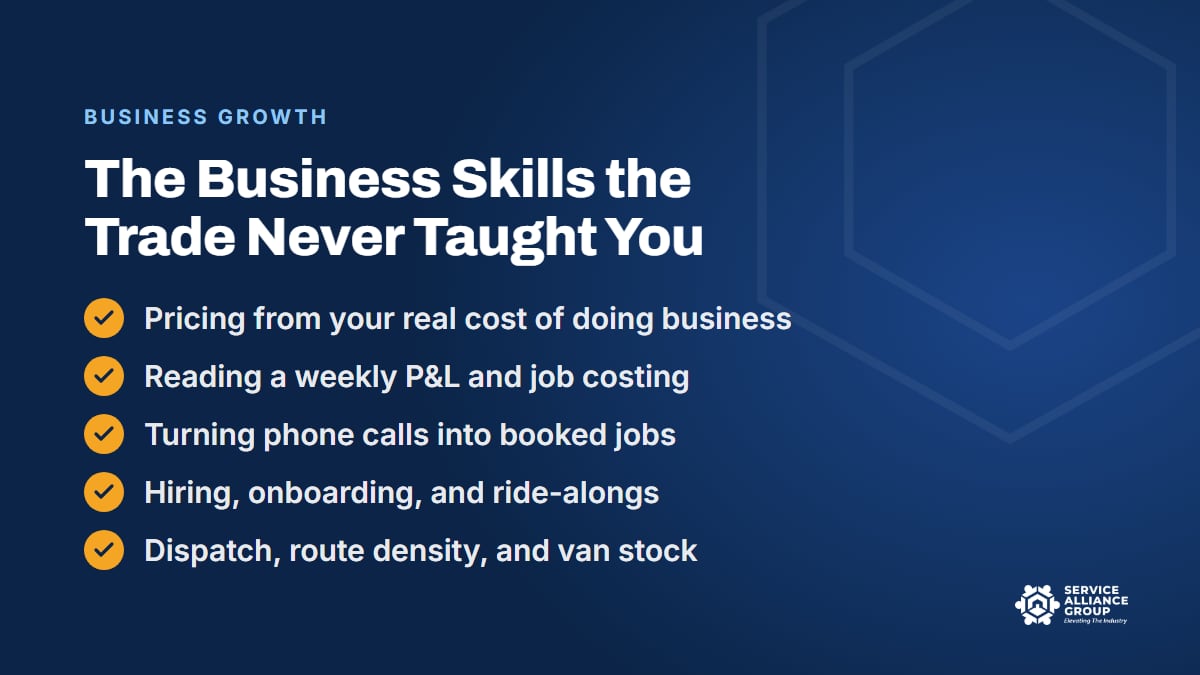
Start with pricing, because everything else depends on it. Open the Cost of Doing Business calculator and work out what an hour on the schedule actually costs you: van, insurance, fuel, tools, the office, the phone, your own pay. Then compare it to what you charge. For some owners, that single hour of learning explains the last three years.
Then make the learning active. Read one lesson, listen to one episode, or study one report, and change one thing in the shop that week. Adjust the diagnostic fee. Add two questions to the intake script. Move van stock to a bin system. Learning that never turns into a change is entertainment.
2. Keep Your Techs Certified and Current
Technical training is the part of lifelong learning that owners usually believe in already, so this habit is about doing it on purpose instead of when a callback forces it.
Many manufacturers run training programs for the servicers who work on their products, and brands that use authorized servicers for warranty work often set training requirements. Find out what the brands you see most offer, and put your techs through it. Brand training helps most on the models your techs see every week, and if you want to do warranty work for a brand, its training is often part of getting there.
One certification is not optional. Technicians who service or dispose of appliances that contain refrigerant need EPA Section 608 certification, and Type I covers small appliances such as household refrigerators and freezers. Confirm who on your team is certified and keep copies of their certification cards on file.
Then track it. A simple training log per tech (what they took, when, what it cost, what changed) turns training from a favor into a plan. If your callbacks are concentrated on one appliance type, that is next quarter's training, and our post on improving first-time complete rates shows how to find that pattern.
3. Protect a Weekly Learning Hour
Learning that is not on the calendar rarely happens. The phone, the parts run, and the tech who called in sick will take every unscheduled hour you have. So put one hour on the calendar, same day, same time, and treat it like a booked job. This is the habit that makes lifelong learning real instead of a nice idea.
What goes in the hour matters less than the hour itself, but here is a shape that works:
- 20 minutes of input. One course lesson, one podcast episode, one chapter, or one report from your own software.
- 20 minutes of thinking. What does this mean for my shop specifically? Where is the gap?
- 20 minutes of doing. Write the new script line, change the price sheet, draft the SOP, or send the email to the parts supplier.
Keep a running notebook. One line per week: what you learned and what you changed. Twelve months later, that notebook is the clearest record you will have of how the business changed. It also keeps you from learning the same lesson twice, which is easy to do when nothing is written down.
If an hour feels impossible, start with twenty minutes on Friday afternoon when the schedule is dying anyway. The habit matters more than the length.
4. Learn From Other Owners: Podcasts and Communities
Some of the fastest learning in the trades comes from an owner a couple of steps ahead of you: someone who has already added the second truck, remembers what broke, and will tell you before it breaks for you.
That is why we keep the podcast going. Each episode is a real conversation about running an appliance repair business, with owners and operators talking through pricing, hiring, systems, and the problems nobody warns you about. Put it on in the van between calls. Every episode is free, so one a week adds up to about fifty lessons a year that cost you nothing.
The other place is The Alliance, our free private Facebook group with more than 5,500 owners in it. A question like "how do you handle home warranty jobs" can get answers from owners who deal with them every day. A few ways to get more out of it:
- Search before you post. Your question may already have a thread full of answers.
- Ask with numbers. "My booking rate is 58 percent and my fee is $89, what would you change?" gets better answers than "how do I book more calls?"
- Answer what you know. Explaining your van stock system to someone else is the best way to find the holes in it.
- Ignore the loudest opinion and look for the pattern. When owners in different markets keep describing the same result, pay attention.
Communities also help with the loneliness of owning. Nobody in your house wants to hear about parts markup. The group does, and lifelong learning is a lot easier in company.
5. Train the Whole Team
An owner who learns while the team stands still just becomes the bottleneck in a smarter way. Lifelong learning has to reach the CSR and the techs, or it stays a hobby.
The cheapest training you have is the ride-along, one of the oldest teaching methods in the trades. A new tech riding with your best tech for two weeks learns the customer interview, floor protection, and how to explain a part on order. Make it deliberate: a checklist of what they should see and a short debrief after each job. Our post on the benefits of standard operating procedures explains why the written version matters too: a procedure is learning that survives the day a tech quits.
Ten minutes of the Monday meeting can be a lesson. Play a recorded call and score it together (if you record calls, follow your state's consent rules). Walk through one callback and what would have caught it. Read a review out loud and name who earned it. Small, weekly, and specific beats a training day once a year.
Pay for training and tie it to a path. A tech who can see the route from apprentice to lead tech, and who knows the next certification is on the shop's dime, has a reason to learn and a reason to stay. If you are adding employees for the first time, the U.S. Small Business Administration's guide to hiring and managing employees covers the employer basics, and the SOP Library has hiring and HR documents you can adapt.
6. Learn From Your Own Numbers
Your software is full of lessons that are easy to skip past. Every closed job, missed call, and parts order is data about how the shop actually runs, as opposed to how you think it runs. Reading it is about as honest as lifelong learning gets, because the numbers do not care about your feelings.
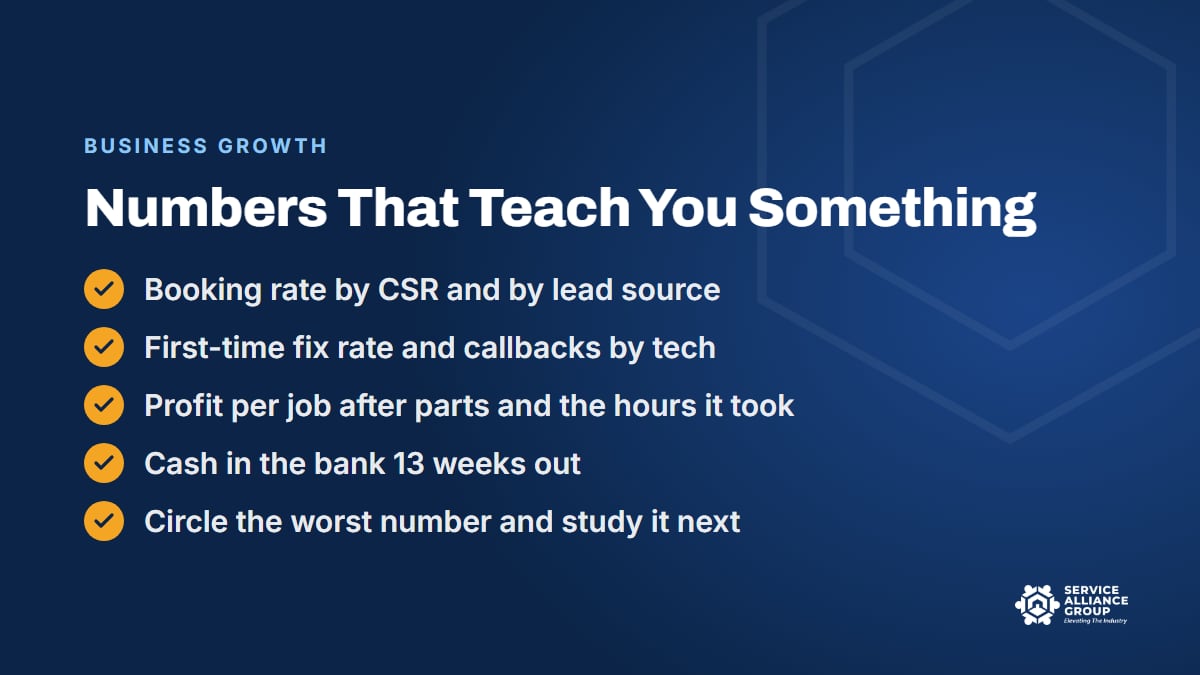
Start with five:
- Booking rate. Booked jobs divided by qualified calls, by CSR and by lead source. This tells you whether the phone is a leak.
- First-time fix rate. Jobs completed on the first visit. Low numbers point to van stock, diagnostics, or training.
- Callback rate by tech. Return visits for the same problem within your window. This is the tech training plan, written by your customers.
- Profit per job. Revenue minus parts and the cost of the hours the job took, drive time included. Some job types you think are winners are not.
- Cash 13 weeks out. What is coming in, what is going out, and where the thin week is. This is the number that prevents the January panic.
For example, say your dishwasher jobs average $290 in revenue, $85 in parts, and an hour and a half of tech time including the drive, and your cost of doing business is $120 an hour. That job clears $25. A thin number like that tells you to look at the price, the drive time, or the parts markup before you give up on dishwashers, and now you know which conversation to have.
Give the numbers a standing appointment each month. Print them, circle the one that got worse, and make that the subject of next month's learning hour. Over a year, this loop of measure, learn, change, and measure again is how a shop grows instead of just staying busy.
Courses Built for Lifelong Learning in Appliance Repair
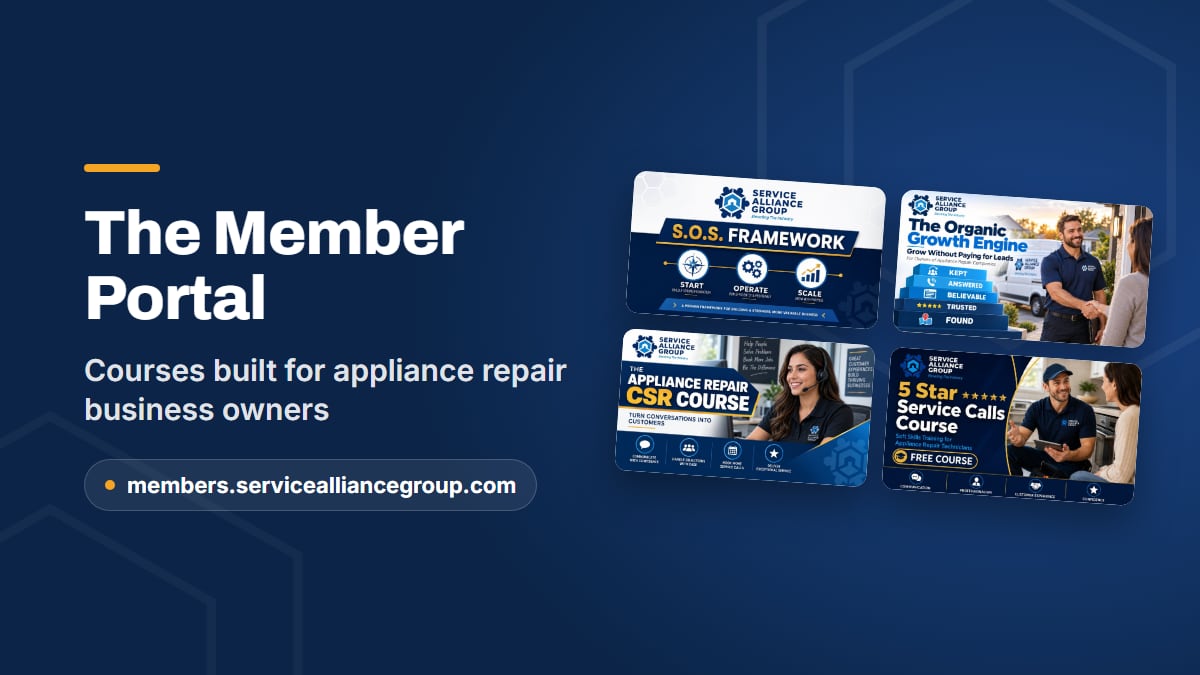
Everything above works with free tools and a notebook. When you want the business side taught in order, built specifically for appliance repair business owners, that is what the member portal is for. Courses are sold one at a time, two of them are free, and monthly All-Access includes every course plus the SOP Library.
- Appliance Repair CSR Course (free): 8 modules and 29 short lessons with demo calls and script cards, so the person answering your phone learns intake, presenting the fee, objections, and speed to lead.
- 5 Star Service Calls (free): 38 short lessons on the soft skills of the visit, from the on-my-way message to asking for the review. Built for techs, with a final test.
- The S.O.S. Course (Start, Operate, Scale): one course in three stages, 70 lessons and more than 21 hours, with 70 downloadable tools including 12 live spreadsheets, a quiz after each stage, a master test, and a certificate of completion. Start covers legal setup and the pricing math. Operate covers the numbers that run a shop: KPIs, job costing, the weekly P&L, the 13-week cash forecast, call conversion, first-time fix rate, van stock, and dispatch. Scale covers when to hire, comp models, onboarding, the management layer, commercial work, and what your business is worth.
The two free courses are an easy way to start on habit five. Enroll your CSR and your techs, work a lesson or two into the Monday meeting, and see what changes on the phone and at the door.
Frequently Asked Questions
What does lifelong learning mean for an appliance repair owner?
It means treating the business side the way you already treat the technical side: something you keep studying because it keeps changing. Pricing, the phone, hiring, cash flow, dispatch, and marketing each have a set of skills that technical training does not cover. Owners who learn them deliberately, one subject at a time, pay less for those lessons in slow months and bad hires.
Do my technicians need certifications?
Technicians who service or dispose of appliances that contain refrigerant need EPA Section 608 certification, and Type I covers small appliances such as household refrigerators and freezers. Many manufacturers also run training programs, and brands often set training requirements for authorized warranty servicers. Licensing rules vary by state and city, so confirm what applies to the work you do and talk to a qualified professional about licensing and insurance where you operate.
How much time should I spend learning each week?
One protected hour is enough if it happens every week and ends with one change in the shop. Lifelong learning is a habit, and owners who wait for a free afternoon rarely find one. Put the hour on the calendar like a booked job, split it between input, thinking, and doing, and keep a one-line notebook of what you learned and what you changed.
Where should I start if I have never studied the business side?
Start with your cost of doing business, because so much else depends on it. Run your real numbers through the free calculator, compare the result to what you charge, and fix pricing first. Then move to the phone: enroll your CSR in the free course and listen to a few of your own calls. Hiring and cash flow come next.
Is it worth paying for training if a tech might leave?
An untrained tech can leave too, and they are less useful while they stay. Pay for training, tie it to a clear path from apprentice to lead tech, and write what they learn into your procedures so the shop keeps it either way. A trained tech who stays three more years can repay that investment many times over.
The trades will keep changing, and so will the business of running a shop. The owners who keep up are the ones who kept learning after the truck was paid off.